A Turkish fastener company bought a Plymouth bolt plant, and a defense contractor delivered its first Army combat vehicle prototype with turrets built in town, putting two local manufacturers in the spotlight the same week.
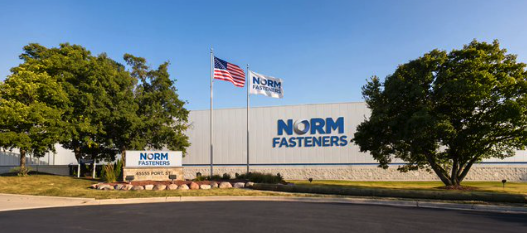
Norm Fasteners, a major Turkish fastener manufacturer, acquired a 121,000-square-foot automotive bolt facility in Plymouth, trade publication IMPO Magazine reported on X on Aug. 31.
The company plans to retain the existing workforce and keep current customer programs running, according to a Patch summary of the deal.
The acquisition gives Norm Fasteners a U.S. production hub it intends to coordinate with its Lansing facility. The target is 20,000 tons of annual output. The company also plans to diversify the Plymouth plant's product line beyond automotive fasteners.
The previous owner's name, the number of workers on site and the purchase price have not been disclosed.
Separately, American Rheinmetall Vehicles announced Tuesday, Sept. 1, that it delivered the first of eight Lynx XM30 combat vehicle prototypes to the U.S. Army. Precision turret fabrication for the vehicles takes place at the company's Plymouth facility before sub-systems move to Slidell, Louisiana, for hull and chassis integration.
The delivery is part of a Phase 3/4 Engineering and Manufacturing Development contract valued at approximately $764 million, according to an American Rheinmetall press release. The Lynx XM30 is competing to replace the Army's legacy M2 Bradley Fighting Vehicle. General Dynamics Land Systems delivered its own competing prototype days earlier, Defence Blog reported.
Matt Warnick, CEO of American Rheinmetall, said in the press release that "Team Lynx now has the opportunity to show the Army that we can deliver on the promise of a modern replacement for the Bradley."
The vehicle features a hybrid-electric powertrain. American Rheinmetall, headquartered in Auburn Hills, leads a contractor team that includes Textron Systems, Raytheon, L3Harris Technologies, Allison Transmission and Anduril Industries. Seven more prototypes are expected later in 2026 for operational unit training.
The Army is expected to select a winning XM30 design in 2027.