Each spring and summer, Plymouth resident Larry Martin heads into the woods at least twice a month without a flashlight, his border collie at his side, listening for frog calls in the dark.
Martin is one of hundreds of volunteers helping Friends of the Rouge track amphibian populations across the Rouge River watershed, which runs through Plymouth, Plymouth Township and Canton Township. After 28 years of data collection, the nonprofit says four frog species appear to be declining in the 466-square-mile watershed: wood frogs, midland chorus frogs, northern leopard frogs and spring peepers.
Spring peepers are showing the steepest drop.
Martin, who monitors 14 survey spots this year, has been volunteering with the program for five years. He told Bridge Michigan in an Aug. 14 report that he relishes the after-dark encounters: "You'd be surprised how close you can get to the deer at night if you're just walking through the woods without a light. I've been startled by deer snorting at me."
The monitoring project, which Friends of the Rouge launched in 1998, asks trained volunteers to visit assigned quarter-square-mile wetland "blocks" on damp, warm evenings from March through July. They listen for at least three minutes and record which of eight species are calling. The U.S. Environmental Protection Agency has designated the Rouge River an "area of concern," a site degraded by human activity.
What the data shows
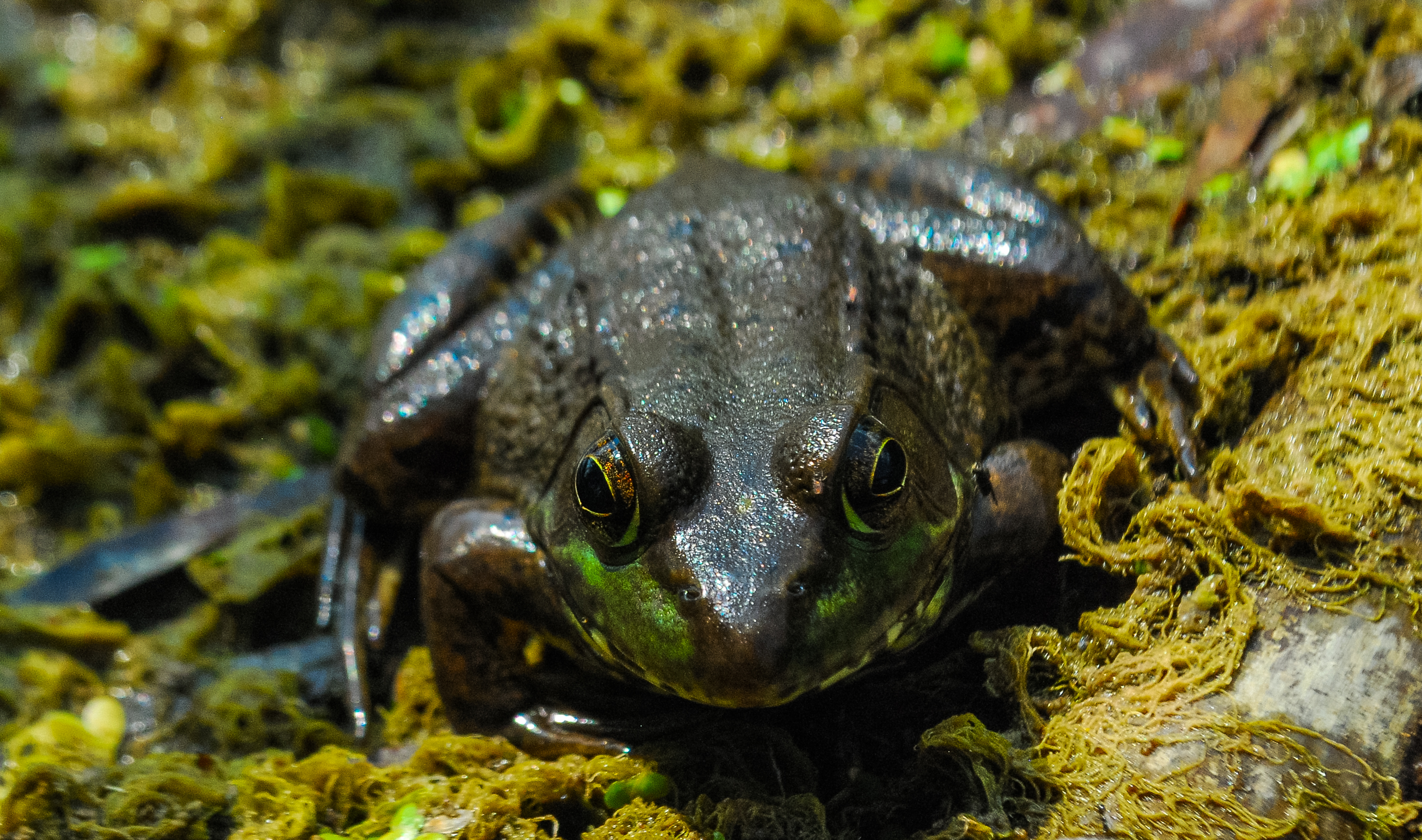
While four species appear to be declining, four others are increasing: American toads, gray treefrogs, green frogs and bullfrogs, with gray treefrogs showing the sharpest rise.
Sam Davis, monitoring coordinator with Friends of the Rouge, told Bridge Michigan the declining species tend to be early-season callers and that recent winters with extreme temperature swings have been particularly hard on them. Davis said increased development may be displacing habitat, while climate change could be amplifying weather extremes.
The nonprofit cautioned that more research is needed before drawing firm conclusions, describing the data as pointing to patterns rather than definitive answers.
How to get involved
Friends of the Rouge, headquartered at 650 Church St. in downtown Plymouth, is recruiting volunteers for the next survey season. Sign-ups are expected to open in December at therouge.org. Volunteers must pass a proficiency test on frog and toad calls before heading into the field. A volunteer-built web tool called Froggy Voice lets surveyors practice identifying calls alone and in combination.
Martin noted that people nervous about nighttime woods can listen from their car at some survey locations.