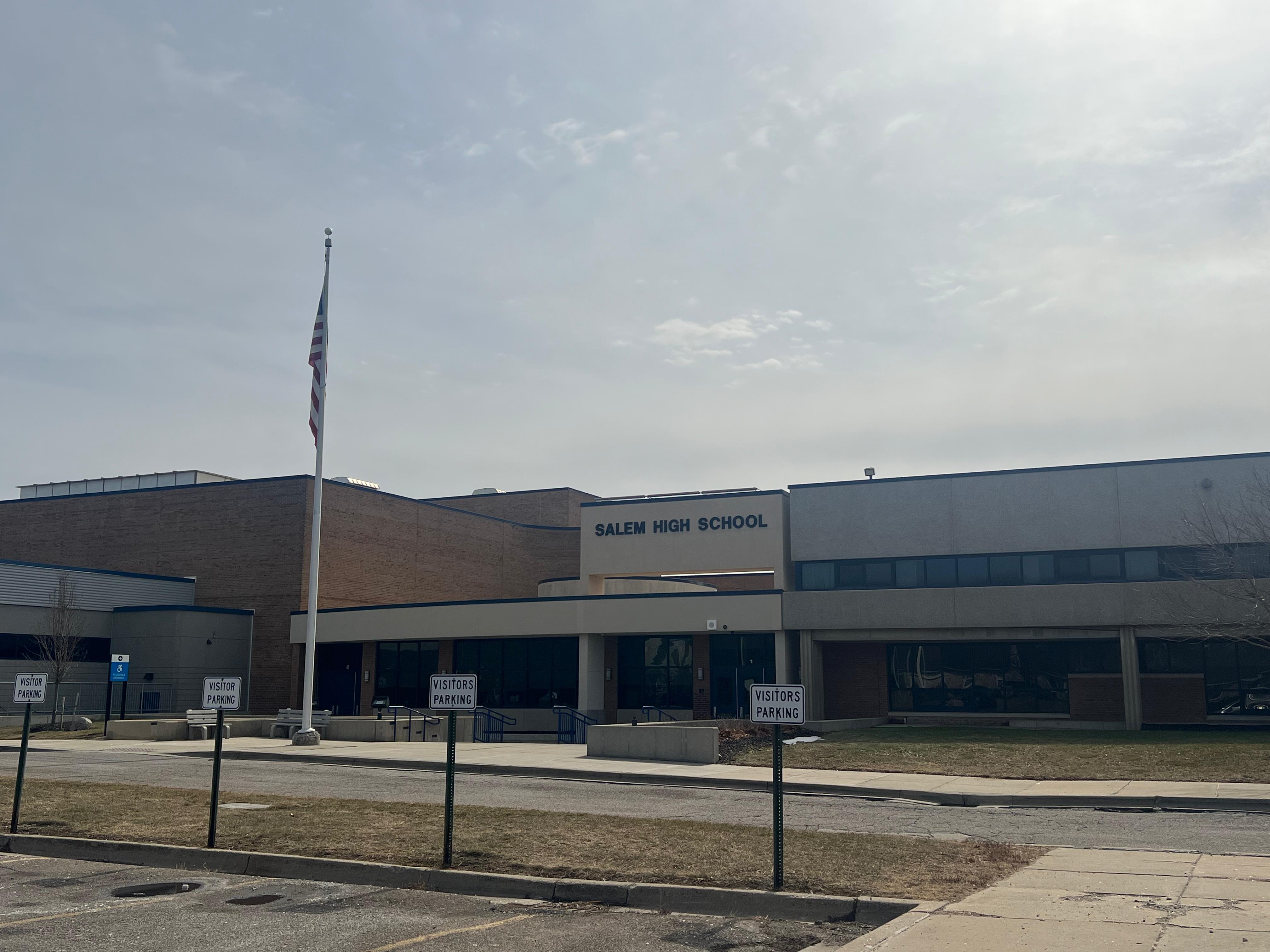
Salem High School English teacher Kelly Giromini called Michigan's new classroom cellphone ban "a bumpy road in the beginning" as Plymouth-Canton Community Schools students returned Monday, Aug. 31.
Gov. Gretchen Whitmer signed the bipartisan law Feb. 10, barring cellphone use during instructional time in all public and charter K-12 schools. Each school decides how to enforce it. That flexibility has left some P-CCS teachers, students and parents uncertain about what the first weeks will look like across the 16,083-student district.
Giromini told Planet Detroit that as of July, Salem teachers had not received clear enforcement guidance and expected to learn more during August professional development sessions. She suggested that if phones are stored in bins or pouches, a teacher could grab the container during an evacuation and return devices once students reached safety.
Olivia Schneid, a P-CEP senior, said she previously used her phone alongside her Chromebook to cross-reference websites during class research. She questioned whether parents could reach students in a campus-wide emergency, telling Planet Detroit the campus lacks enough office staff to field calls from roughly 6,000 students during a crisis.
State Rep. Matt Koleszar, a Plymouth Democrat who chairs the House Education Committee and is a former teacher, said the ban grew from concerns by schools and parent groups that students were too distracted by devices. He said parents can call the school in an emergency.
Parent Kerri Bennett, whose daughter Lilly attends Salem, said she worries about reaching Lilly during a lockdown but acknowledged that phone use in that situation could put students in more danger. She said she hopes schools have a plan to return stored phones quickly if students need to evacuate.
The law restricts smartphones during instructional time only. Students may use phones between classes and at lunch, and may carry basic phones that can call or text but cannot access social media apps, according to Bridge Michigan. A companion measure requires schools to create protocols for student phone use during emergencies such as active-shooter situations. The law does not impose penalties on districts that fail to comply.
A trial phone restriction at P-CEP the prior school year offered a preview of enforcement challenges. Schneid said some teachers asked students to place phones in bins, but enforcement was inconsistent. Cole Shaft, 14, a recent West Middle School graduate in Plymouth, described a stricter policy at his school requiring phones to stay in lockers all day. He told Planet Detroit students found ways around it, often tucking phones behind Chromebooks.
An April 2026 National Bureau of Economic Research study of more than 43,000 schools found phone bans reduced screen time during the school day but did not significantly improve test scores, attendance or attention levels. Stanford Graduate School of Education professor Thomas Dee, a co-author, said building effective, phone-free learning environments "does not appear to be a simple or quick fix."
The P-CCS Policy Committee reviewed a draft wireless device policy at its June 23 meeting, according to board records. No final vote on the district's policy has appeared in public records as of the start of the school year.