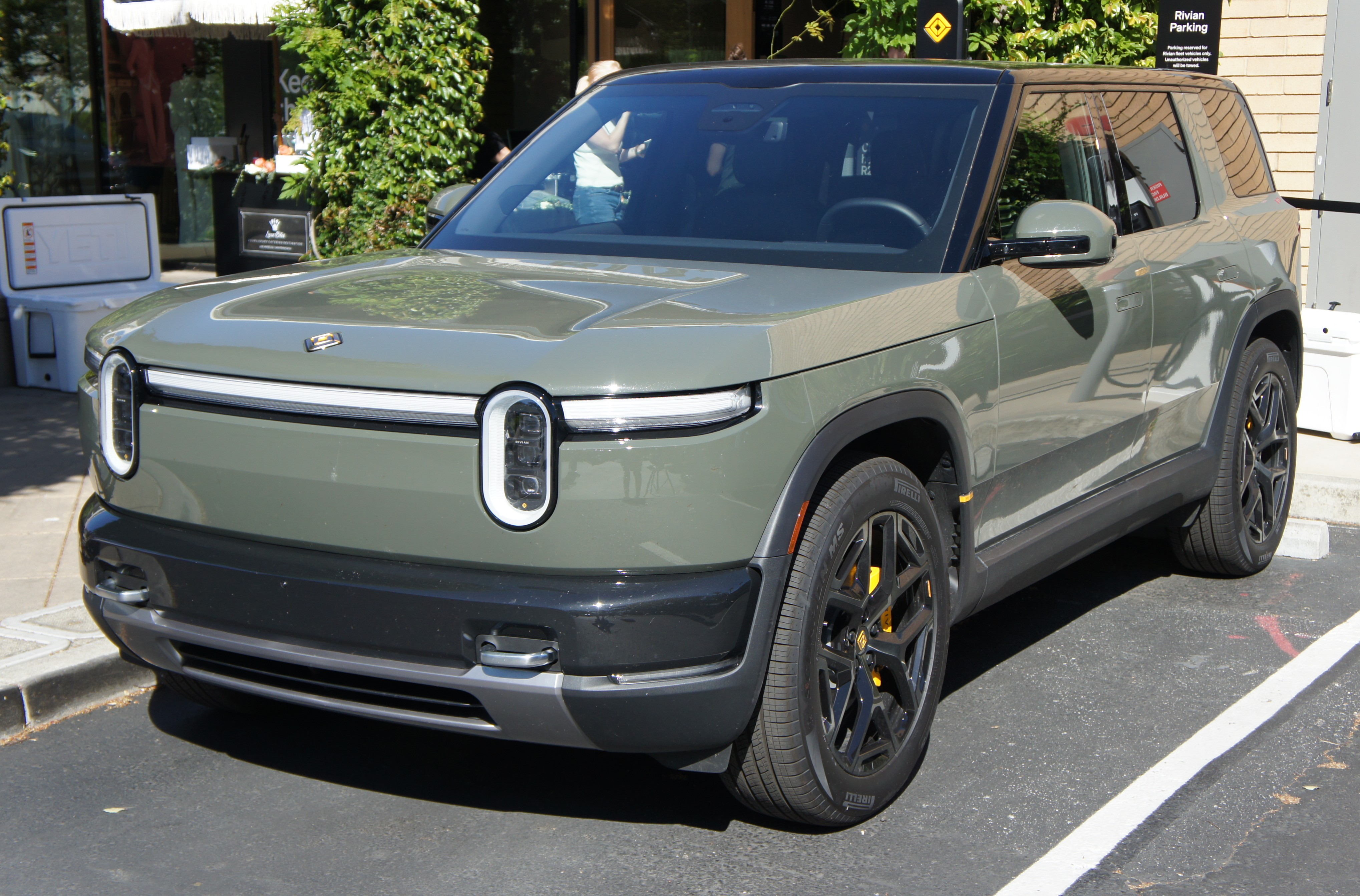
Rivian's Plymouth engineering team opened its doors Tuesday, July 22, to show exactly how the company cut costs on the battery pack powering its new R2 electric SUV.
Greg Dachner, program director and chief engineer for the R2, and Matt Wolfe, vehicle hardware engineering lead, walked engineers from Munro & Associates, an automotive benchmarking firm, through the R2's redesigned battery at Rivian's Engineering Prototyping Development Center in Plymouth. The teardown event, filmed for the Munro Live video series, laid out engineering decisions that cut component costs by as much as 70% in some areas compared to the older R1 platform.
The biggest change: the R2 uses 776 larger-format 4695 cylindrical cells instead of the 7,776 smaller 2170 cells packed into the R1. The new cells are taller, which created a packaging challenge. Rather than raise the cabin floor, Rivian's team made the battery pack itself serve as the vehicle's floor, eliminating a redundant structural layer and saving about 7 millimeters of vertical space.
"By doing that we save seven millimeters of space," Wolfe said at the Plymouth event. "We took that seven millimeters and put it to good use in two ways. The first is through ground strike protection... The second is we added more venting space in the pack."
That extra venting room let engineers simplify the pressure-release system and cut the number of valves, reducing cost without sacrificing safety.
Rivian also consolidated power electronics, the rear zonal controller, and high-voltage components into a single unit called the "powerhouse," tucked under the rear seat. Dachner said that consolidation reduced high-voltage cabling costs by about 70% compared to the R1.
The chassis saw similar treatment. Wolfe said the team switched from aluminum castings to stamped steel for lower control arms, subframes, and rear links, cutting chassis-structure component costs by roughly 49% while still shaving 8% off weight.
Dachner framed the overall strategy as "part consolidation" rather than removing features customers would notice.
The R2 began production at Rivian's Normal, Illinois plant in April and started reaching customers in June. The launch Performance trim starts at $57,990, with a $53,990 Premium version expected later in 2026 according to Rivian. A $48,490 rear-wheel-drive Standard model is slated for early 2027.
Plymouth's role
Rivian has operated its Plymouth prototyping and development center since 2015. At least one engineering role is currently posted on the Michigan Talent site: Prototyping Manufacturing Engineer, listed at $78,200 to $97,700.
Rivian raised its full-year 2026 delivery forecast on July 2 to between 65,000 and 70,000 vehicles, up from a prior range of 62,000 to 67,000, according to Reuters. The company's next major product milestone is the $48,490 Standard R2, expected in early 2027.