Wayne County has reported 1,036 cyclosporiasis cases as of Thursday, July 23, making it the hardest-hit county in what state officials call the largest cyclosporiasis outbreak in U.S. history.
The county's case count nearly doubled in one week. Wayne County had 582 cases on Thursday, July 16. Seven days later, that number jumped to 1,036, according to the Michigan Department of Health and Human Services. Plymouth, Canton Township, and Plymouth Township all fall within Wayne County.
Statewide, MDHHS counted 7,664 confirmed cases as of July 23, up from 7,171 on Wednesday, July 22. Of those, 160 people have been hospitalized. No deaths have been reported.
Michigan typically sees 40 to 50 cyclosporiasis cases in an entire year. Dr. Natasha Bagdasarian, the state's chief medical executive, said on July 18 that the Michigan numbers alone make this "probably the biggest outbreak of cyclosporiasis in US history."
Source still unknown
Investigators have not confirmed what is causing the outbreak. Bagdasarian said on July 16 that health officials were zeroing in on lettuce and salad greens but added that they do not have a definite product identified as the source.
The CDC has linked cases in Michigan, Indiana, Kentucky, Ohio, and West Virginia to shredded iceberg lettuce served at Taco Bell locations. A Taylor Farms iceberg lettuce sample initially flagged for the parasite was later determined to be a false positive by the FDA. Taylor Farms completed a voluntary recall of iceberg lettuce from central Mexico on Friday, July 17.
What residents should know
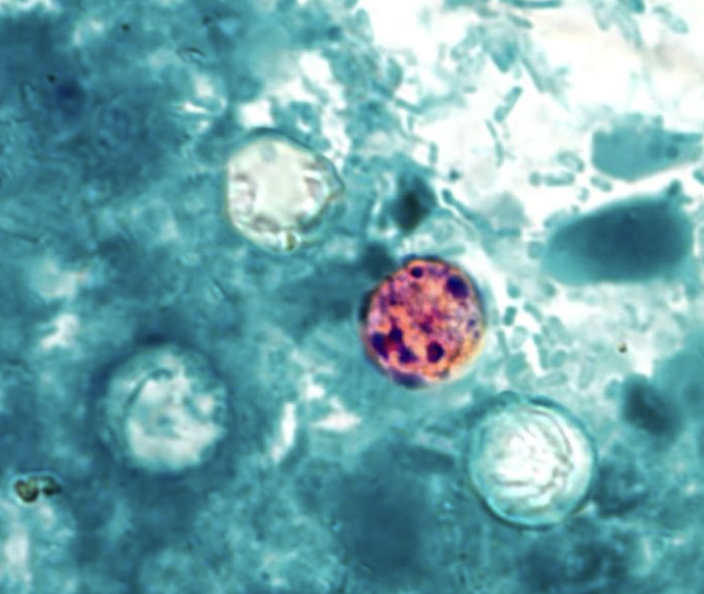
Cyclosporiasis is an intestinal illness caused by a microscopic parasite that infects the small intestine. It spreads through contaminated food or water, not person to person.
Symptoms include watery diarrhea, fatigue, nausea, stomach cramps, and loss of appetite. The illness can last more than a month without treatment, and symptoms can relapse. Incubation runs about one week after exposure but can range from two days to two weeks.
A doctor can diagnose the illness with a stool sample, and it is treatable with prescription antibiotics.
MDHHS safety guidance
MDHHS spokesperson Lynn Sutfin said on Monday, July 21, that the department recommends residents buy whole heads of lettuce rather than pre-washed, bagged lettuce or pre-mixed salad kits. The agency also advises:
- Discard the outer two to three layers of leaves before preparation.
- Wash inner leaves under clean running water.
- Cook greens to at least 158°F when possible. The parasite resists routine chemical disinfection.
These precautions are especially important for people with weakened immune systems, including chemotherapy patients, organ transplant recipients, infants, young children, and older adults.
The CDC said it expects cases to continue increasing through the end of August, when the typical Cyclospora season ends. MDHHS updates county-level case counts daily, Monday through Friday, on its Infectious Disease Outbreaks page at michigan.gov/mdhhs. Residents experiencing sudden or ongoing diarrhea should contact their healthcare provider.