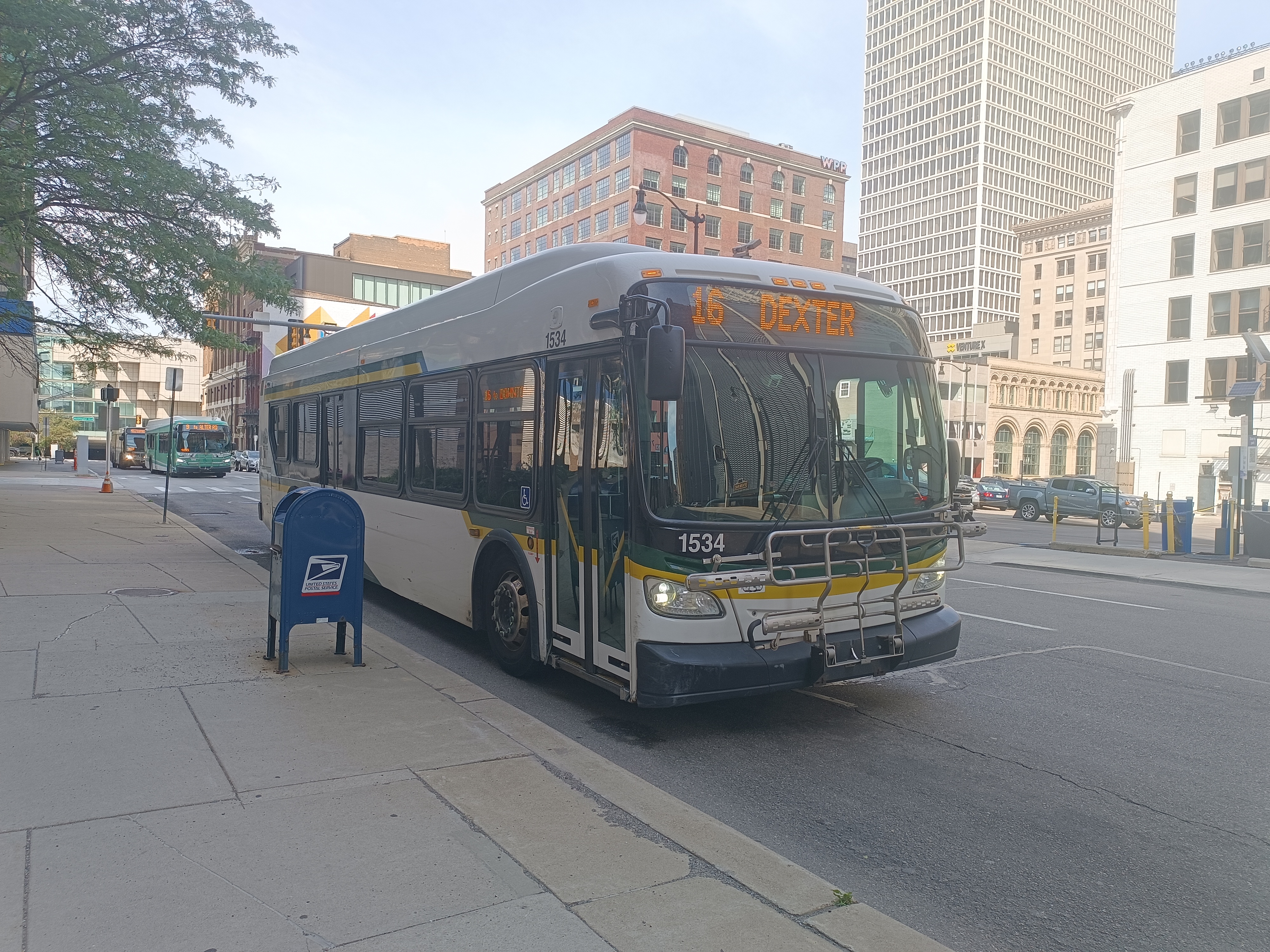
Plymouth Township and Canton Township homeowners would pay roughly $8 a month in new property taxes if Wayne County voters approve a 10-year transit millage on Tuesday, Aug. 4.
The two townships are among 17 Wayne County communities that have historically opted out of SMART bus service and have no fixed-route public transit. A law passed by the Michigan Legislature in 2024 and signed by Gov. Gretchen Whitmer in January 2025 eliminated the opt-out, meaning Plymouth and Canton residents will vote on the millage for the first time alongside the county's other 26 communities.
The millage would be levied at 0.9831 mills, about 98 cents per $1,000 of taxable value, from 2026 through 2035, collecting an estimated $57.6 million in its first year, according to the ballot language approved by the Wayne County Transit Authority. For the 26 communities already paying the transit tax, the rate stays the same. For Plymouth Township, Canton Township, and the other opt-out communities, it's new money.
"It averages about $8 a month for a house value of $200,000," Wayne County Executive Warren C. Evans told WXYZ on July 15. That figure is based on market value; in Michigan, taxable value is typically half of market value, so a $200,000 home would carry roughly $100,000 in taxable value and owe about $98 per year.
What Plymouth and Canton would get
At a joint work session of the Plymouth Township Board of Trustees and Planning Commission on March 3, SMART staff identified both townships as having the strongest potential for fixed-route bus service in western Wayne County. The evaluation cited industrial corridors, medical centers, and multifamily housing clusters as key demand generators.
Two proposed routes would serve the area: Route 295, connecting Detroit through Livonia and Plymouth Township to Canton Township, and Route 345, running from Commerce Township through Northville and Plymouth to Canton and Van Buren Township. Both are planned for 2027 implementation if the millage passes. Flex on-demand service is also proposed for lower-density areas.
Approximately $23.2 million of the annual revenue would go to the opt-out communities, with about $21.1 million earmarked for operating costs of the new fixed-route and flex services, according to the March 3 presentation.
What happens if it fails
If the millage does not pass, Evans told WXYZ that transit funding would stop at the end of 2026. That would affect not just the opt-out communities but also the 26 municipalities already receiving SMART service, including dial-a-ride and specialized transportation for seniors and people with disabilities.
The vote is decided by a single countywide majority. One community cannot block or preserve service on its own.
Local residents split
Plymouth resident Ron Picard told CBS Detroit in June that he opposes the millage, pointing to Oakland County's experience after voters there approved a similar 0.95-mill transit tax in 2022.
"If you look at Oakland County's 2022 millage, they had a big map of what the proposed routes could be. When you look at what they've actually provided over the last four years, it's just a tiny fraction of what they promised," Picard said.
Plymouth Township resident Steve Barnaby told the same outlet he sees it differently, calling the millage "an investment into the community, not an expense."
How to weigh in
Canton Township is hosting a town hall on Tuesday, July 28, from 4 to 6 p.m. at the Canton Public Library, 1200 Canton Center Road, where planning staff, OHM Advisors consultants, and Board of Trustees members will present transit recommendations and take questions. Polls open countywide on Tuesday, Aug. 4.